
For years, a classroom standard has been the posted lesson objective. Personally, this has always been an exercise in fruition for me. Is it a simple way to help students in case the administrator comes in? Is it something that we just reference at the beginning and never come back to? I will admit that, too often, I have found myself putting that up, but never referencing it during the lesson. In reality, the purpose of this exercise is clear, to allow students to know the focus of the lesson and give the teacher a visible reminder of the target, but to often it is left dangling on the board.
Jeff Archer, et. al., in an article for “The Learning Professional”, observed that the evidence that administrators collect must also change to reflect this practice, “Instead of asking if the lesson objective was posted, these new instruments typically ask to what extent the objective was clear to students, how well the teacher connected the objective to students’ prior knowledge, and to what extent the teacher reinforced the objective.” This demonstrates the clear shift in thinking necessary for the focus of the lesson to remain the target throughout the duration of the lesson. For teachers and administrators we must accept this challenge to make the focus of our instruction increasingly meaningful to students.
In case you need more convincing on the importance of having a clear focus, many educational researchers have elaborated on the importance of ensuring students have a clear understanding of what the learning target or focus is for the lesson. Jere Brophy, in his book Encouraging Students to Learn states, “Goals (or focus), not content coverage or learning processes provide the rationale for curriculum and instruction.” Hubbell and Pitler expounded on the importance of this in the book Classroom Instruction that Works expanded on this by stating, “When teachers identify and communicate clear learning objectives, they send the message that there is a focus for the learning activities to come. This reassures students that there is a reason for learning and provides teachers with a focal point for planning instruction.” The McRel study continued to show the importance of setting learning goals and setting objectives provided a .31 effect size. As you set your yearly goals, I hope that this is enough for you to consider lesson focus as an extremely high priority!
In the Gym (Prep outside of school)
Over the last several years, I have become a gym rat. However, I don’t go to the gym so I can perform better at the gym, but so I am healthier and better outside of the gym. In the same way as teachers we must spend some time in the educational gym, grasping at PD and other opportunity to become more healthy as educators. Every item in this series will contain an “In the Gym” section where I focus on this health. Now, back to the focus!
Know your content, know your pedagogy and know your students! In our practice it is a constant struggle to know where to go next with our personal learning. We spend a great deal of our post college time learning about teaching strategies, but rarely go back to learning the content and focusing on what we are teaching. I would encourage you to take the time and really consider the content that you are teaching. What else could you learn about it? Are there interesting facts or applications that you may be unaware of? This broadened understanding will make a large difference as you clear up your focus. Using this increased understanding of content, you will find a clearer focus of what needs to be taught and improve your roadmap to your learning targets.
On the other end of the spectrum, maybe your content is clear but you could brush up on the strategies or vehicles that you use to deliver the information. Too often I have found I start my lesson with the target in mind, but by the end of the hour, I find that my lesson has shifted away from the target. Focusing on what is available will assist you in becoming more adept at taking the challenge to focus your lessons and aligning all activities with your target.
Finally, knowing your students. Always considering that you are not teaching last years students, or even last hour’s students, will make a large difference in designing plans that fit with the group that you are teaching. Secondary teachers know this all to well, as the lessons we teach in one hour completely flop in another. When this happens it is important to remember that the students are the center of the learning and the group dynamics change from one year to the next or one hour to the next. While the focus remains the same for these different groups, the activities and class materials may be completely different as long as the focus remains clear.
Focus your Planning
How are you working to focus your lessons?
How are you planning with your focus in mind? Standards begin to provide us with the road map for our direction as educators. However, simply reading the standards does not give the educator the tools to create 180 highly focused lesson plans. It is the work of teachers, administrators and coaches to unpack these standards and utilize different methods to turn these broad statements into a clearly focused lessons. There are many resources that will assist through this broad project, however, utilizing a backwards design approach, such as UbD (Understanding By Design) will be of a greatly improve your ability to keep focus in individual lessons. If you are in need of resources, check out the Vanderbilt Center for Teaching overview @ https://cft.vanderbilt.edu/guides-sub-pages/understanding-by-design/ .
Setting your Focus
What is the Focus?
Begin with the end in mind by using a backwards design approach. Soon, you will find that working together for our common purpose makes all of the pieces will fall into place. As you take the time to go through this process, make sure that you take time to reflect, contemplate and collaborate with your colleagues. Creating well constructed lesson foci will not only assist in boosting student achievement, but also set a framework for instruction as we move through the other strategies that Hattie and Marzano agree on.
What must be included in Lesson Goals is given in 5 attributes according to John Hattie.
• Clearly state what you want the student to learn.
• Can focus on deep or surface learning
• Must be challenging for the students relative to their current mastery of the subject
• May be grouped (a single lesson may include more than one goal)
• Must be shared with students
Focusing on the goal of the lesson and sharing it with students has a profound effect on the student’s understanding of what is expected of them. Communicating these goals with students is of dire importance, but why stop there? Learning goals can be communicated with parents and other stakeholders as well. When parents understand the learning objectives of a class, they have the opportunity to share in their student’s learning and give relevance to what occurs during the school day.
Hubbell and Pitler expand that learning focus should not limit students, “Set learning objectives that are specific but not restrictive. Communicate the learning objectives to students and parents. Connect the learning objectives to previous and future learning. Engage students in setting personal learning objectives.”. It is important to communicate learning objectives to students explicitly by stating them verbally, displaying them in writing, and calling attention to them throughout a unit or lesson. For some additional goal/ focus writing resources, check out the following
https://www.uwlax.edu/sotl/lsp/developinggoals.htm
http://www.evidencebasedteaching.org.au/lesson-goals-2/
The Game Plan
When delivering and strategizing for your instruction, Marzano propose different strategies to use questioning at the beginning of a lesson. While different strategies of questioning can be utilized, the process of questioning elicits our students to begin to think without simply being told what is about to happen.
Marzano Examples
How do you add mixed fractions with different denominators? That’s what you must know by the end of this lesson.
What is the difference between elements and compounds…
Why is Persuasive Essay A better than Persuasive Essay B…
When (what period) were Egypt’s Pyramids Built…
Hattie Examples
What are today’s lesson goals?
What do I already know that will help me achieve these goals?
What actions do I need to take to ensure that I achieve these goals?
Conclusions
As we consider keeping learning in focus, it is important to look ahead to providing overt instruction. Prior to instruction, educators must utilize the tools in our tool-box to keep the lesson focus easily understood by the students. No matter how many times we repeat the focus, if the students don’t grasp what we want them to learn, the focus was not clear. The art of teaching makes us relate to our students and know what is important to them. Keeping our students first will allow us to keep fine-tune our focus and truly make a positive impact on the achievement of all students.


![What School Could Be: Insights and Inspiration from Teachers across America by [Dintersmith, Ted]](https://images-na.ssl-images-amazon.com/images/I/41YeKgmjAgL.jpg)
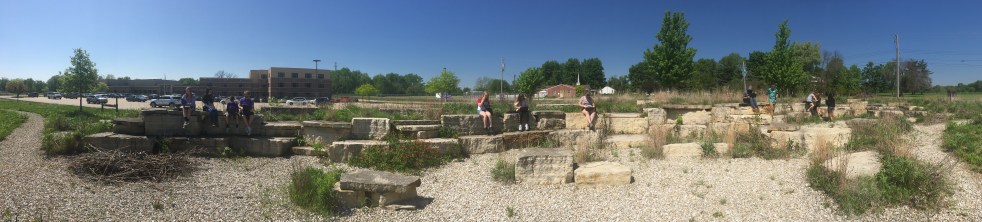 May teacher burnout is real. As teachers we often struggle to deliver amazing lessons and content to students who are also beginning to check out for the year. This does not have to be the case. Often times teacher struggle is caused by over-delivery, over-talking, and over-working throughout the school year. As teachers, we have to stop doing the work for our students, putting them in the drivers seat and spending our time stoking their curiosity. At the end of the year, I prefer to allow students to create an inquiry based project where they are almost completely in the driver’s seat. They have an assignment to learn about, must frame questions, and answer those questions. But it doesn’t stop their, they have to create a final product that shows what they have learned. For many creative students, this drive them through those research tasks they do not want to do and propagates increased success. As you close the year, I would encourage you to spend some summer time researching inquiry based learning, project based learning and the blended classroom. A great summer read would be Learn Like a Pirate by Paul Solarz.
 Speaking Principal